
Top 10 Hydrophobic Vent Manufacturers Worldwide

Top 10 Hydrophobic Vent Manufacturers Worldwide

A Hydrophobic Vent is a small component with a demanding job: allowing air or gas to pass while resisting liquid water. In electronics enclosures, outdoor sensors, lighting, and battery systems, that balance can help limit pressure buildup and moisture exposure. Tiny pores. Real consequences. Performance depends on more than a material name; pore structure, membrane chemistry, housing design, and installation all matter.

Industry reports provide useful context, but not a direct ranking of vent suppliers. MarketsandMarkets’ Membrane Filtration Market report tracks commercial demand for membrane-based separation, while Grand View Research’s Industrial Filtration Market report examines wider filtration trends. These reports describe adjacent markets, not hydrophobic vent sales specifically. That distinction matters. Buyers should treat market growth as context, not proof that any individual product will perform well.

This guide examines ten manufacturers with attention to product range, published specifications, application experience, and global availability. Where possible, compare water-entry resistance, airflow, operating temperature, chemical compatibility, and enclosure fit using current datasheets. A vent that performs well in a clean laboratory may face dust, detergent, salt spray, or repeated temperature swings in service. And no datasheet tells the whole story. Verify test conditions, request application-specific guidance, and confirm that the listed product matches the intended assembly. Manufacturer capabilities and regional support can change, so this overview is a starting point for evaluation, not a substitute for engineering review.
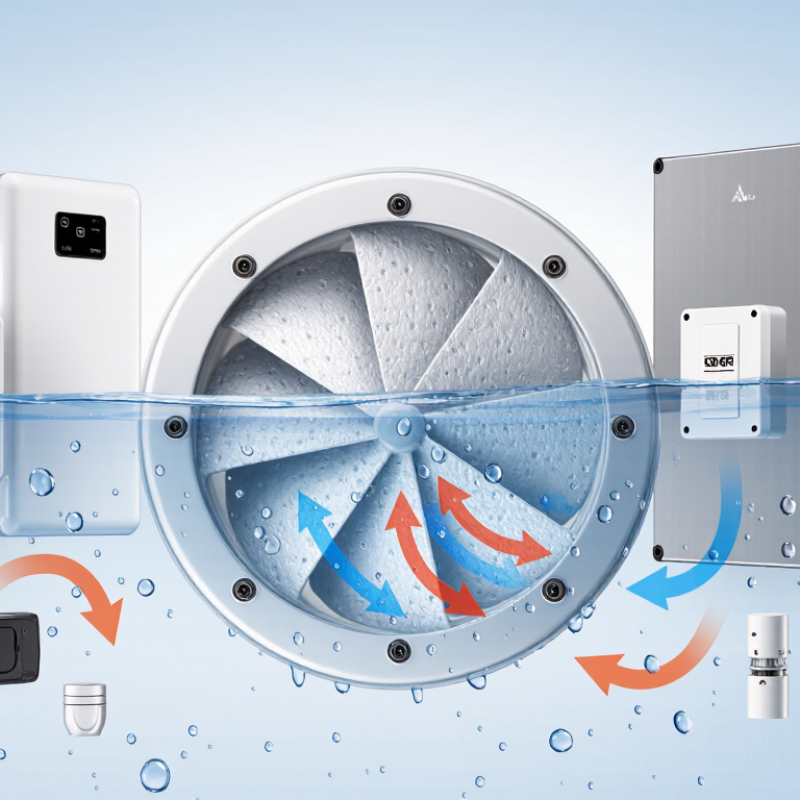
Top 10 Hydrophobic Vent Manufacturers Worldwide

Hydrophobic Vent Fundamentals: ePTFE Membranes, Pore Size, and Water Entry Pressure

Hydrophobic vents use expanded PTFE (ePTFE), a porous membrane that repels liquid water while allowing air and vapor to pass. Pore size is a design trade-off. Smaller pores generally raise resistance to water entry, but can also restrict airflow. Published membrane technical data commonly list nominal pore sizes around 0.1–1.0 μm and water-entry pressures of roughly 20–100 kPa. These are screening ranges, not universal guarantees. Small pores help.

ASTM F316-03(2019) describes capillary-flow porometry for measuring pore characteristics, including bubble-point behavior. The largest pores matter: one oversized opening can become the first path for water intrusion. Water-entry pressure also depends on membrane surface condition, test liquid, and temperature. A 20 kPa pressure is roughly equivalent to a two-metre water column, though test setups are not interchangeable.

ISO 811:2018 measures resistance to water penetration under hydrostatic pressure. It offers useful test context, but a fabric hydrostatic-head result should not automatically be treated as a vent’s certified water-entry rating. In practical qualification, test the assembled vent, not only a membrane coupon; housing edges and adhesive joints can become leak paths. That detail is easy to miss. A reported pore size alone cannot predict performance in a wet, vibrating enclosure.

Hydrophobic ePTFE Vents: Pore Size and Theoretical Water Entry Pressure

Smaller pores generally require higher pressure for water to enter. The values shown are theoretical estimates using the Young–Laplace relation, assuming cylindrical pores, a water surface tension of 72.8 mN/m at 20°C, and a water contact angle of 110°. Actual water entry pressure depends on membrane structure, surface treatment, test conditions, and pore-size distribution; these estimates are not product specifications.

Protection Ratings Explained: IEC 60529 IPX7 and IPX8 Requirements

IEC 60529 defines IPX7 as protection against temporary immersion, not universal waterproofing. Its test places an enclosure in water for 30 minutes. For enclosures under 850 mm tall, the lowest point sits 1 metre below the surface; taller enclosures are tested with their highest point 150 mm underwater. These are test conditions, not a promise of unlimited field performance. Small detail. Big consequence.

IPX8 covers continuous immersion under conditions agreed between the manufacturer and the user. IEC 60529 requires these conditions to be more severe than IPX7, but does not set one universal depth or duration. The product documentation should state the tested depth and time. A rating alone may leave important questions unanswered. An IPX8 test also does not automatically establish protection against jets or splashes; look for a separate water-jet rating when those exposures matter.

For hydrophobic vents, immersion performance depends on the complete assembly: membrane, housing, seals, and installation. A vent can equalize pressure as temperature shifts, while resisting liquid water under specified conditions. Still, salt, detergent, oils, aging, and damaged adhesive can change real-world behavior. IEC 60529:2013 provides the test framework, but it does not replace application-specific validation. That gap is worth taking seriously.

Top 10 Hydrophobic Vent Manufacturers Worldwide - Protection Ratings Explained: IEC 60529 IPX7 and IPX8 Requirements

Technical comparison guide: The rows below summarize standards-based requirements and practical supplier-evaluation checks. They are not a ranked list of manufacturers or company performance claims.

No. Evaluation Dimension IEC 60529 IPX7 IEC 60529 IPX8 What to Verify with a Hydrophobic Vent Supplier
1 Rating meaning Protection against water ingress during temporary immersion under the specified test conditions. Protection during continuous immersion under conditions agreed for the product and test. Request the exact IP claim and the test report for the complete intended enclosure configuration.
2 Baseline immersion conditions The standard test uses immersion at a depth of 1 m for 30 minutes, with specimen positioning determined by enclosure dimensions. There is no single universal depth-and-duration pair for IPX8; the conditions are specified for the product and agreed between the parties. Confirm the tested depth, duration, water conditions, and any application-specific test parameters in writing.
3 Specimen positioning For enclosures below 850 mm in height, the lowest point is positioned 1 m below the water surface. For enclosures at least 850 mm high, the highest point is positioned 150 mm below the surface. Positioning and immersion conditions are defined for the agreed IPX8 test; they depend on the specified test arrangement. Check that the report identifies the specimen dimensions, orientation, and immersion arrangement used.
4 Test duration 30 minutes under the standard IPX7 test conditions. Set by the agreed IPX8 test conditions; IEC 60529 does not prescribe one duration for every IPX8 application. Compare the tested duration with the product’s expected immersion time and any customer or regulatory requirements.
5 Test severity The defined temporary-immersion test is used to assess the IPX7 claim. The agreed IPX8 conditions are required to be more severe than those specified for IPX7. Do not assume that an unspecified “IPX8” claim represents a particular depth or duration; verify the actual test conditions.
6 Acceptance assessment The result is assessed against the applicable IEC 60529 requirements and the relevant product acceptance criteria. Assessment is made against the agreed immersion conditions and applicable acceptance criteria. Ask how water ingress was assessed and whether any observed ingress affected safety or operation of the tested product.
7 IPX7 and IPX8 claims Supports an IPX7 claim only when the product has been tested and assessed for the applicable IPX7 conditions. An IPX8 claim is tied to its stated test conditions; it should not be treated as proof of a separate IPX7 test without supporting evidence. If both ratings matter, request documentation showing which tests were completed and which ratings are being declared.
8 Dust protection The “X” means the dust-protection characteristic is not specified by this rating. The “X” likewise means the dust-protection characteristic is not specified; the water rating does not establish a dust rating. Check for a separately tested first-digit rating if dust protection is required for the application.
9 Hydrophobic vent function A hydrophobic membrane can help resist liquid water while allowing air or vapor exchange, but the component alone does not establish the enclosure’s IPX7 rating. Vent performance must be validated under the enclosure’s agreed IPX8 conditions; a vent’s standalone claim does not establish the complete assembly rating. Confirm membrane installation, sealing method, housing design, and tested vent configuration match the production assembly.
10 Supplier documentation A relevant report should identify the tested product, configuration, method, and result for the IPX7 conditions. A relevant report should state the agreed depth, duration, and other IPX8 conditions, along with the tested configuration and result. Prefer traceable test documentation from a competent laboratory and confirm that any changes to materials, bonding, or assembly are covered.

How to Compare Manufacturers: Airflow, Pressure Drop, and Membrane Durability

When comparing hydrophobic vent manufacturers, ask for airflow and pressure-drop curves, not a single headline rating. ASTM D737 provides a repeatable method for measuring air permeability; results should state test pressure, exposed area, and conditioning. ISO 9237 also measures air permeability under a specified pressure difference. Keep conditions consistent: a vent that passes more air at one pressure may perform differently in your housing. A small test fixture can reveal leaks around the edge, which membrane data alone will miss.

Tips: Request results before and after water exposure, dust loading, and pressure cycling. Check the test method and sample size. Details matter.

For durability, compare membrane construction and bonding, then ask how airflow and liquid-entry performance change after aging. IEC 60529 defines IPX7 immersion as up to 1 metre for 30 minutes, but that rating does not establish long-term membrane durability or airflow. Ask manufacturers for repeated-test data, including pressure drop at a fixed airflow and liquid-entry pressure after environmental exposure. Look for test temperatures, cycle counts, and failure criteria. A clean lab result can still mislead. Real housings face sharp pressure pulses, uneven clamping, and contaminants; those conditions deserve validation in your own assembly.

Top 10 Hydrophobic Vent Manufacturers: Technologies, Markets, and Product Portfolios

A comparison of ten leading hydrophobic vent manufacturers reveals different strengths in membrane design, conversion, and testing. Most portfolios center on expanded PTFE membranes, adhesive-backed vent discs, molded vents, and roll goods for custom assembly. Their purpose is practical: equalize pressure while limiting liquid-water entry and allowing air or vapor to pass. Performance depends on pore structure, vent area, housing geometry, and exposure conditions—not just a headline rating. Not a small distinction.

Market signals help explain the range of applications, but they are not direct measures of vent sales. OICA reported 93.5 million motor vehicles produced worldwide in 2023, a substantial addressable field for vents used in lamps, sensors, and electronic enclosures. MarketsandMarkets estimated the broader membrane-filtration market at about US$13.8 billion in 2023, projecting US$17.4 billion by 2028. That market is only an adjacent indicator; filtration and protective venting are not interchangeable categories.

Suppliers therefore differentiate through application testing, material options, and formats suited to automotive, outdoor electronics, medical devices, or industrial equipment. Buyers should compare airflow, water-entry resistance, chemical compatibility, and service-life data under relevant conditions. Fit matters more.

Real-world dust, oils, and assembly variation can still undermine a well-specified membrane.

Industry Applications and Testing: ASTM B117 Salt Spray and Thermal Cycling

Hydrophobic vents protect outdoor sensor housings, telecom cabinets, and vehicle electronics while allowing pressure to equalize. Salt spray can expose weaknesses around the vent’s adhesive edge, not just through its membrane. ASTM International’s ASTM B117 practice specifies a neutral salt-fog environment using a 5% sodium chloride solution, held at 35°C with a tolerance of ±2°C. The standard does not set one universal pass time or prove how many years a part will last outdoors. Small details matter.

After salt exposure, inspect for corrosion, blocked pores, edge lift, and reduced airflow. Then apply thermal cycling using a profile suited to the product’s operating range. IEC 60068-2-14 describes temperature-change testing, but the selected temperatures and dwell times depend on the intended use. A vent may look intact yet lose pressure-equalization performance after repeated expansion and contraction. That is easy to overlook.

For meaningful comparisons, record salt concentration, chamber temperature, cycle count, dwell time, and airflow before and after testing. Test finished assemblies, including seams and mounting surfaces, rather than isolated membrane samples alone. ASTM B117 itself cautions that results do not reliably predict natural exposure across all environments. A clean laboratory result is useful, but it cannot reproduce every installation error or weather pattern. The awkward part is that test severity can become a substitute for field evidence; teams should compare chamber results with service inspections and document any mismatch.