
Pressure Reducing
Pressure Sustaining / Pressure Relief
Flow Control valves
Float Valves - Level Control
Electrically Actuated Valves
Pressure Modulation - Remote Control
Altitude Valves - Level Control
Burst Control Valves
Pump Control
CLA-VAL "HYTROL" Main Valve
Valve Controllers and Data Loggers
Air Valves
Choosing Custom Sheet Metal Parts for global sourcing is not simply a pricing decision. It is a way to align design, production, quality, and supply continuity. Custom fabrication can match exact dimensions, material grades, surface finishes, and assembly requirements. A formed steel bracket, for example, may need a 1.2-millimeter thickness, four precise bends, and corrosion-resistant coating. Standard parts rarely provide that level of control.
W. Edwards Deming, a respected manufacturing quality expert, said, “Quality comes not from inspection, but from the improvement of the production process.” His statement remains highly relevant to Sheet Metal Parts sourcing. Reliable suppliers should review drawings, confirm tolerances, test materials, and monitor every production stage. They should also provide clear inspection records and responsive communication across time zones. Small gaps matter. A minor bend variation can affect an entire assembly.
Experienced buyers often compare more than unit prices. They examine tooling costs, minimum order quantities, packaging methods, lead times, and corrective-action procedures. Supplier audits can reveal whether a workshop truly controls laser cutting, stamping, welding, and finishing. Certifications may support confidence, but they do not replace practical verification. That is where sourcing becomes less perfect. Forecasts change, specifications evolve, and even qualified suppliers can miss a detail. A thoughtful sourcing process leaves room for review, testing, and improvement. When managed carefully, Custom Sheet Metal Parts can deliver dependable performance, scalable production, and stronger long-term value in international manufacturing programs.
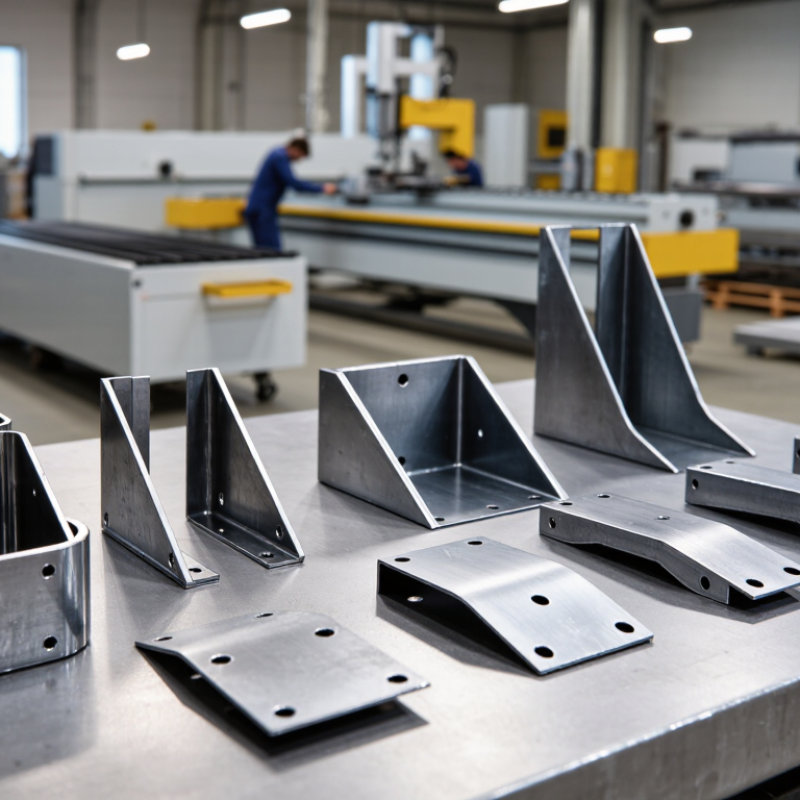
Why Choose Custom Sheet Metal Parts for Global Sourcing?
What Are Custom Sheet Metal Parts?
Custom sheet metal parts are components formed from flat metal sheets to match a specific design. They can include brackets, enclosures, panels, frames, covers, and equipment guards. Unlike standard hardware, their dimensions, holes, bends, finishes, and material grades follow a customer’s drawing.
Common materials include stainless steel, aluminum, carbon steel, and galvanized steel. Fabricators use laser cutting, punching, bending, welding, and surface treatment. Each process affects strength, appearance, cost, and production time. A small bend-radius change can alter the final fit.
A reliable specification should define thickness, tolerances, bend angles, hole locations, and surface requirements. It should also identify critical dimensions clearly. During sourcing, suppliers may provide samples, inspection reports, and material certificates. These records help purchasing teams compare factories with greater confidence.
Practical experience shows that drawings are not always complete. A design may appear finished but still miss a deburring requirement or assembly clearance. Reviewing manufacturability before production can prevent avoidable revisions. It is not flawless, though. Even careful planning may reveal unexpected distortion after welding or finishing.
For global sourcing, custom parts offer controlled repeatability across different production locations. Clear files, measurable standards, and documented inspections reduce communication gaps. However, buyers should confirm packaging, shipment protection, and replacement procedures before placing larger orders. Consistency matters.
Why Choose Custom Sheet Metal Parts for Global Sourcing?
Custom sheet metal parts support global sourcing by matching exact production requirements. Engineers can select steel, aluminum, or stainless steel for each application. Material choice affects strength, weight, corrosion resistance, and shipping cost. Clear drawings also reduce confusion between metric and imperial dimensions. Small details matter.
A reliable supplier should review bend allowances, hole locations, surface finishes, and tolerance limits before production. Inspection reports can confirm critical dimensions before parts leave the factory. Material certificates and traceable batch records add confidence across borders. Standardized packaging protects edges from dents, moisture, and handling damage. These practices make international procurement more predictable.
In my experience, custom parts often simplify complex assemblies. One formed panel may replace several fastened pieces. That can reduce labor, hardware, and inventory requirements. However, custom design is not automatically better. Tight tolerances may increase machining time and cost. That assumption can fail.
Global sourcing also requires practical communication. A supplier should confirm revisions, inspection methods, packing instructions, and delivery documents in writing. Samples can reveal problems that drawings miss, such as springback or coating thickness. I have seen a small bend-radius error delay an entire assembly. Early testing would have prevented it. Reliable sourcing depends on technical discipline, honest feedback, and consistent production records.
Custom sheet metal parts support global sourcing through standardized drawings, repeatable specifications, efficient flat-pack transportation, and flexible supplier selection. The chart shows the 2023 World Bank Logistics Performance Index scores for selected sourcing markets, where higher scores indicate stronger logistics performance.
Source: World Bank, Logistics Performance Index 2023. Scores range from 1.0 to 5.0.
Custom sheet metal parts begin with a practical design, not just a digital sketch. Engineers define the material, thickness, bend angles, hole sizes, and surface requirements. The first drawing is rarely perfect. Real production often reveals small conflicts.
Designers use CAD models to check clearances and bend allowances before cutting begins. A sharp internal corner may cause cracking, so engineers usually add a suitable radius. Tolerances should match the part’s function. Extremely tight tolerances can increase cost without improving performance. This is where experience matters.
Manufacturing typically combines laser cutting, punching, bending, welding, deburring, and finishing. Each process leaves different marks on the metal. Operators inspect edges, dimensions, flatness, and bend accuracy during production. Simple gauges can catch errors before full assembly. Documentation should record material grades, inspection results, and approved drawings.
Global sourcing adds another practical concern. A clear specification reduces misunderstandings between design and production teams. It should include units, revision numbers, packaging needs, and acceptable cosmetic limits. Photos help, but they cannot replace measured data. Communication can still fail, especially when a drawing seems obvious to one engineer. A trial batch exposes these weaknesses early. It may cost more at first, but it often prevents larger delays later.
Why Choose Custom Sheet Metal Parts for Global Sourcing?
What to Evaluate When Choosing a Global Supplier
Custom sheet metal parts support precise designs, compact assemblies, and changing production needs. They can reduce unnecessary material and simplify installation. A supplier must understand your drawings, not merely cut and bend metal. Review its experience with laser cutting, punching, forming, welding, and surface finishing. Ask for sample parts made from similar materials and thicknesses.
Quality evidence matters. Check material certificates, inspection records, calibration practices, and traceability from raw sheet to packed parts. Confirm achievable tolerances with actual measurement data. A clear first-article inspection process can reveal problems before mass production. Request photographs of gauges, corner details, welds, and finished surfaces. Small scratches may become expensive after shipment.
Communication deserves equal attention. Test whether the supplier answers technical questions with specific details and realistic dates. Discuss packaging, labeling, shipping documents, and delivery buffers before placing an order. Verify its ability to meet applicable safety, environmental, and import requirements in your market. A capable factory may still struggle with documentation. That risk is easy to underestimate. Compare quotations by total cost, including tooling, inspection, freight, rework, and delays. A low price can conceal weak process control. Ask how nonconforming parts are isolated and corrected. Also review capacity during peak seasons, because promised lead times may change quickly. No supplier is perfect. A transparent weakness is often safer than an impressive but vague promise.
Custom sheet metal parts support many industries that need durable, precise, and adaptable components. In automotive production, they form brackets, enclosures, shields, and structural supports. Electrical equipment makers use them for control cabinets, panels, and protective housings. These parts can improve airflow, reduce assembly steps, and fit limited installation spaces.
Medical equipment manufacturers also benefit from clean, repeatable metal enclosures. Their designs often require smooth surfaces, careful edge finishing, and reliable material records. Renewable energy projects use custom panels, mounting covers, and battery enclosures that must handle outdoor conditions. Construction equipment, telecommunications systems, and industrial automation need similar strength and flexibility. In my sourcing reviews, the best results usually come from clear drawings, realistic tolerances, and early sample checks. Small details matter.
Tips: Define the material, thickness, finish, and critical dimensions before requesting quotations. Ask for inspection records and sample approval. Confirm packaging requirements for long-distance shipping. Do not assume the cheapest offer is the lowest-cost choice. I have seen minor burrs delay assembly and create unexpected labor. A rushed drawing can do the same. Custom fabrication is powerful, but it is not automatically efficient. Design changes after production begins may increase waste, lead time, and inspection effort. Reviewing manufacturability with an experienced supplier can prevent these problems, although even careful planning cannot remove every risk.
| Industry | Typical Custom Sheet Metal Parts | Common Materials | Common Manufacturing Processes | Key Benefits of Custom Parts | Important Requirements |
|---|---|---|---|---|---|
| Automotive and Transportation | Brackets, battery trays, protective covers, equipment panels and chassis components | Carbon steel, stainless steel, aluminum and galvanized steel | Laser cutting, CNC bending, punching, welding and powder coating | Supports lightweight designs, repeatable production and integration with vehicle assemblies | Dimensional consistency, corrosion resistance, vibration resistance and traceable quality control |
| Industrial Machinery | Machine guards, mounting plates, control cabinets, access panels and structural brackets | Mild steel, stainless steel and aluminum | CNC laser cutting, forming, tapping, welding and surface finishing | Enables rapid design changes, precise fit-up and efficient production of low-to-medium volumes | Load capacity, hole-position accuracy, safe edges and compatibility with standard hardware |
| HVAC and Refrigeration | Air ducts, equipment housings, fan panels, filter frames and mounting components | Galvanized steel, aluminum and stainless steel | Sheet cutting, roll forming, CNC bending, riveting, sealing and coating | Provides application-specific airflow paths, strong enclosures and efficient material utilization | Air tightness, corrosion resistance, thermal performance and accurate assembly dimensions |
| Electrical and Electronics | Electrical enclosures, instrument panels, server cabinets, chassis and cable-management covers | Aluminum, stainless steel, galvanized steel and cold-rolled steel | Precision cutting, punching, bending, hardware insertion and powder coating | Delivers tailored protection, organized component layouts and repeatable enclosure geometry | Electrical safety, grounding provisions, ventilation, shielding and ingress protection requirements |
| Renewable Energy and Power Equipment | Inverter housings, cable trays, battery enclosures, support brackets and protective covers | Aluminum, stainless steel, galvanized steel and coated carbon steel | Laser cutting, forming, welding, sealing and corrosion-resistant finishing | Combines structural strength, environmental protection and scalable production for equipment platforms | Weather resistance, heat management, mechanical strength and safe cable routing |
| Medical and Laboratory Equipment | Equipment housings, instrument panels, trays, carts and mounting brackets | Stainless steel and aluminum | Precision cutting, bending, TIG welding, deburring and polished or coated finishing | Supports cleanable surfaces, ergonomic layouts and controlled fit between components | Surface cleanliness, smooth edges, corrosion resistance, dimensional accuracy and documentation |
| Construction and Building Systems | Flashing, access panels, mounting brackets, façade components and equipment covers | Galvanized steel, aluminum, stainless steel and pre-finished steel | Shearing, folding, roll forming, punching and protective coating | Allows site-specific dimensions, consistent interfaces and efficient handling of architectural details | Weather resistance, dimensional stability, code-related requirements and installation accuracy |
| Telecommunications and Networking | Equipment racks, wall-mounted cabinets, cable trays, brackets and network enclosures | Cold-rolled steel, galvanized steel, aluminum and stainless steel | Laser cutting, punching, bending, hardware insertion and powder coating | Provides organized cable management, adaptable layouts and protection for sensitive equipment | Ventilation, grounding, load capacity, access clearance and protection against dust or moisture |
Note: Material selection, forming methods, tolerances and finishing requirements should be confirmed against the part drawing, application conditions and applicable industry standards.
CLA-VAL UK Limited
Dainton House
Goods Station Road
Tunbridge Wells
Kent, TN1 2DR
© 2025 CLA-VAL UK | site map | Terms and Conditions of Sale and Warranty | Privacy policy