How to Choose the Right Ceramic Mixer Machine for Your Needs?
Choosing the right ceramic mixer machine is crucial for ensuring optimal results. The right machine can significantly influence the quality and efficiency of your ceramic production process. Many options are available, each with unique features and specifications.
Understanding your specific needs is essential when selecting a Ceramic Mixer Machine. Factors like batch size, mixing speed, and material compatibility matter. Consider what types of ceramics you will work with. Different machines excel in different areas. Some may mix faster but offer less precision. Others might provide high-quality mixing but operate slower.
Reflecting on your production goals can aid your decision. Are you focusing on high volume or intricate designs? The balance between speed and quality is vital. A poor choice could lead to inefficiencies and wasted materials. Take time to evaluate your options. A wrong decision might haunt your production line for years.
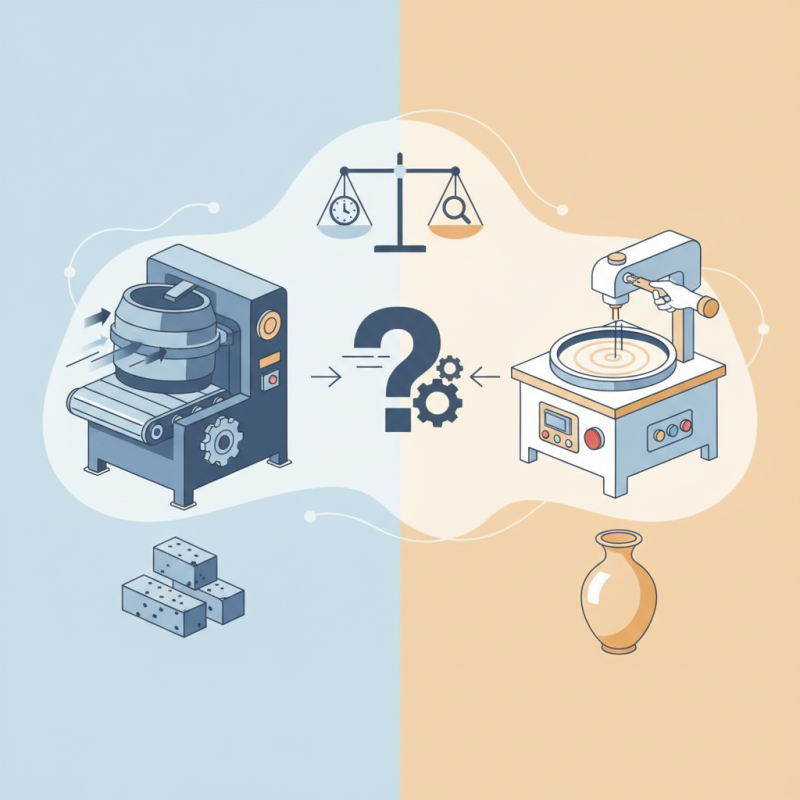
Understanding the Different Types of Ceramic Mixer Machines
When selecting a ceramic mixer machine, it's essential to understand the various types available. Common options include ribbon mixers, planetary mixers, and double-cone mixers. Each type has its unique features that cater to specific mixing needs. Ribbon mixers are great for dry materials, while planetary mixers excel at creating consistent pastes. Double-cone mixers offer efficient blending for larger batches.
**Tips:**
Consider the scale of your production. A smaller workshop may not need the same capacity as a large industrial facility. Think about the types of materials you will mix. If you work with heavy clays, a robust mixer is vital.
Another aspect to scrutinize is the mixing speed. Some jobs require precise control, while others benefit from high-speed mixing. Look for machines that allow speed adjustments. Remember, frequent adjustments may lead to inconsistency in your final product.
**Tips:**
Don't forget to evaluate maintenance costs. A cheaper machine might have higher upkeep expenses. Regular maintenance can save you time and money in the long run. Ultimately, the right choice blends your needs with machine capabilities. However, it's always wise to reflect on past experiences to refine your choices.
Comparison of Different Types of Ceramic Mixer Machines
Key Features to Consider in a Ceramic Mixer Machine
When selecting a ceramic mixer machine, there are several key features to evaluate. The motor power plays a crucial role. A powerful motor can thoroughly mix materials, ensuring consistent results. Look for machines with variable speed settings. This flexibility allows you to adapt to different clay consistencies.
Another important aspect is the mixing capacity. Consider the size and volume of your projects. If you work with large batches, a bigger mixer is essential. Conversely, for small projects, a compact machine might suffice. Remember, too large a machine can be overwhelming. It may take up valuable space in your studio.
Finally, pay attention to the build quality. A sturdy design is important for durability. Look for materials that can withstand heavy use. The ease of cleaning is another factor. Some machines have removable parts, which simplify maintenance. Reflect on your workflow needs. A machine should enhance your process, not hinder it.
Assessing Your Production Needs and Volume Requirements
Choosing the right ceramic mixer machine requires a thorough assessment of your production needs. Understanding your volume requirements is crucial. According to industry reports, companies producing over 10,000 units per month may need high-capacity mixers. For smaller operations, effects of energy consumption should also be considered.
When evaluating your production capabilities, think about the variety of materials you plan to mix. Some ceramic materials are denser than others. A mixer suited for lightweight compositions may struggle with heavier mixtures. It’s essential to find a balance. Note that discrepancies in production quality can arise from inadequate machinery.
Tips: Always test a machine's efficiency with your specific materials. Gather feedback from your team. They can help identify operational drawbacks early. Consider upgrading if production slows down or if final products lose consistency. It can cost more in the long run to stick with outdated technology. Prioritize machines that offer flexibility for future expansion or changes in production style.
Evaluating Material Compatibility for Ceramic Mixer Machines
When selecting a ceramic mixer machine, material compatibility is crucial. Different ceramic compositions can behave distinctively under varying conditions. For instance, a report by the American Ceramic Society emphasized that mixing porcelain requires different approaches compared to earthenware. Differences in moisture content, viscosity, and particle size can lead to issues in the mixing process if not matched correctly.
Choosing a mixer for specific materials is not straightforward. Some mixing machines handle clay bodies well, while others excel with slip. A study by Ceramics Industry found that 40% of manufacturers experienced inconsistent mixes due to incorrect equipment choices. This inconsistency can lead to product defects, affecting overall production and costs.
Keep in mind the need for flexibility. A machine that works for one batch may not be optimal for another. Ceramic components might react differently under various conditions, necessitating regular evaluations of equipment performance. Continuous monitoring can help identify potential compatibility issues. Being aware of these nuances can lead to better decision-making in the long run.
Budgeting and Cost Considerations for Your Mixer Purchase
When considering a ceramic mixer machine, budgeting is key. The initial cost varies widely. Basic models start around $500, while high-end machines can exceed $10,000. A 2021 industry report highlighted that 40% of businesses feel pressured to cut costs, which can lead to poorer equipment choices. Investing wisely is important.
Quality should be weighed against cost. Cheaper mixers often lack durability and may require constant repairs. These repairs can accumulate, costing users more in the long run. A reliable machine might seem expensive upfront but could save money over time.
Tip: Evaluate your production needs. If your output is minimal, a lower-cost model may suffice.
Maintenance costs should also be factored in. Machines that are not user-friendly will lead to increased downtime. A breakdown can halt production, affecting profit margins. As an industry insight, manufacturers with a robust warranty can significantly reduce long-term costs.
Tip: Always read reviews and user experiences. They can provide valuable insights into long-term performance and hidden costs.