Top Tips for Choosing Pressure Reducing Regulators?
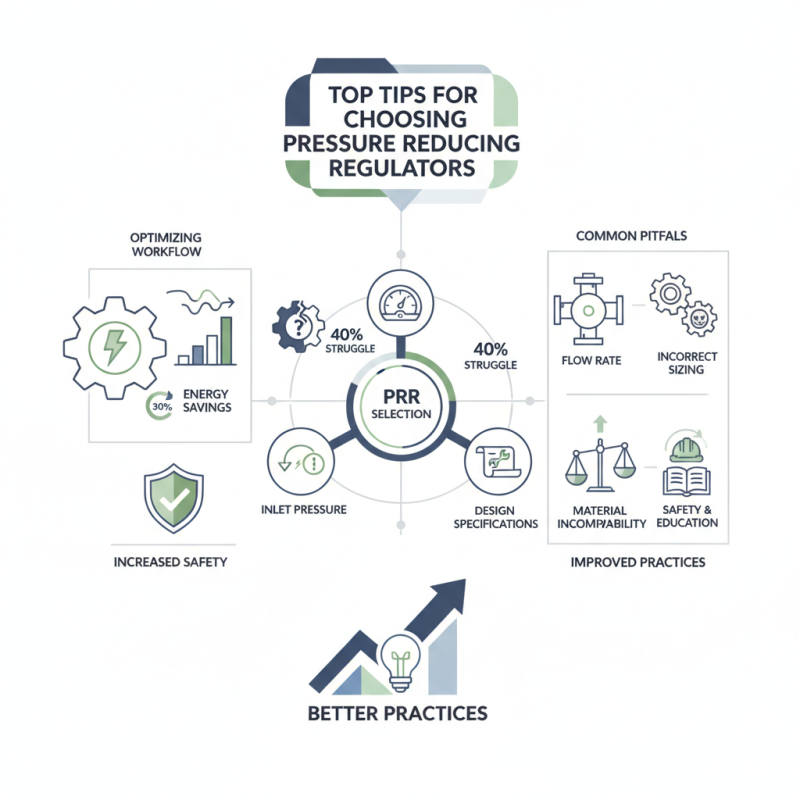
Choosing the right Pressure Reducing Regulators (PRRs) is crucial for optimizing workflow in various industries. A recent report by the Global Pressure Regulation Market indicates that inefficient regulators can increase energy consumption by up to 30%. This inefficiency leads not only to higher operational costs but also to potential safety hazards. Implementing the right PRRs can significantly reduce these risks.
PRRs play a vital role in controlling gas and liquid pressures, ensuring stable operations. An industry analysis showed that approximately 40% of organizations struggle with selecting the appropriate regulators. Factors such as flow rate, inlet pressure, and design specifications often overwhelm decision-makers. Real-world examples highlight cases where improper selections resulted in equipment failures.
Understanding the specifics of PRR selection is essential. Oversized or undersized regulators can cause erratic performance. Many users overlook the importance of material compatibility, leading to premature wear. By addressing these common pitfalls, organizations can improve efficiency and safety. Awareness and education in this area are necessary for better practices.
Understanding the Functionality of Pressure Reducing Regulators
Pressure reducing regulators play a crucial role in various applications. They ensure that the pressure of a gas or liquid remains stable. This stability is essential for safety and efficiency. Understanding how these regulators function can help users make informed choices.
These regulators work by reducing the incoming high pressure to a lower, more manageable level. Key components include a diaphragm, spring, and valve. When the pressure increases, the diaphragm moves. This action opens or closes the valve according to the set pressure. It’s fascinating how such a simple mechanism can prevent dangerous pressure build-up.
However, choosing the right regulator is not always straightforward. Users must consider flow rates, pressure ranges, and media compatibility. Each application may require different specifications. Sometimes, mistakes can occur in selection, leading to inefficiencies. Reflecting on what’s needed in specific scenarios can help avoid these pitfalls and ensure effective usage.
Key Specifications to Consider When Selecting a Pressure Reducing Regulator
When selecting a pressure reducing regulator, there are key specifications to keep in mind. Start with inlet and outlet pressure ranges. Ensure they match your system's requirements. Mismatched pressures can lead to equipment failure. A regulator with too low a range may not perform adequately.
The flow capacity of the regulator is another essential aspect. It should accommodate your application’s needs without causing pressure drops. Check the specifications carefully.
Pay attention to materials as well. The chosen materials must withstand the fluid’s properties. Corrosion resistance could be vital in many applications.
Consider the size and weight of the regulator as well. A bulky regulator may complicate installation. Compact models can fit into tighter spaces. Look for ease of maintenance features too. Some regulators may require frequent adjustments or servicing. Such requirements could lead to operational downtime. It’s worth reflecting on how much upkeep your system can handle.
Material and Design Considerations for Longevity and Efficiency
When choosing pressure reducing regulators, material and design play crucial roles. The right materials ensure durability and improve efficiency over time. Common materials include brass, stainless steel, and plastic. Each has unique advantages. Brass may corrode, while stainless steel is robust in harsh conditions. Plastic is lightweight but less durable.
Tips on selecting materials: Consider the environment. If the regulator is for outdoor use, stainless steel is ideal. It resists rust and extreme temperatures. For low-pressure applications, plastic might suffice. Evaluate your operating conditions carefully.
Design also impacts longevity. Regulators with simpler designs often have fewer failure points. A compact design can enhance performance. However, it may limit serviceability. Check for features that allow easy maintenance. Sometimes, a more complex design is necessary for specific applications.
Balancing material choices and design elements is essential. Never overlook the potential for wear and tear. Choosing the right combination will lead to better performance and efficiency. Reflect on your application needs. Are you prioritizing durability or cost? Your answers will guide your decision-making process.
Assessing Compatibility with Existing Systems and Pressure Requirements
When selecting pressure reducing regulators, compatibility with existing systems is crucial. Evaluate the materials used in your current setup. Different materials react uniquely under various pressure and temperature conditions. For instance, brass might not be suitable if your system contains certain chemicals. Check for corrosion risks.
Next, consider the pressure requirements of your system. You need to know the input and output pressure specifications. Mismatched pressures can lead to inefficiency or system failure. Many users overlook this aspect. They may assume that one regulator fits all, but this is rarely the case. Even small variations can impact performance significantly.
Lastly, think about the size and footprint of the regulator. A large regulator might not fit in a confined space. This can lead to awkward installation challenges. Many decisions are driven by immediate needs but can lead to longer-term headaches. Take time to reflect on your choices before making a decision.
Top Tips for Choosing Pressure Reducing Regulators
This chart shows the importance of various factors when choosing pressure reducing regulators, based on a survey of industry professionals. Each factor is rated on a scale from 1 to 10, indicating its significance in the selection process.
Evaluating Manufacturer Reputation and Product Warranty Considerations
When choosing pressure reducing regulators, consider the manufacturer's reputation. A trusted manufacturer often indicates reliability and quality. Look for companies with a history of positive reviews. Online feedback provides insight into other users' experiences. Trustworthy manufacturers invest in quality control. This can prevent costly failures later.
Warranties are crucial too. A solid warranty shows confidence in the product. A longer warranty period is often a good sign. It means the manufacturer believes in its durability. However, read the fine print. Some warranties come with hidden conditions that may limit your coverage. Understanding these details can aid your decision.
Evaluate customer support as well. Quality service can make a difference. If you have questions or issues later, responsive support is vital. Ask potential manufacturers about their response times. Sometimes, customer support isn't as strong as it should be. This may lead to frustration down the line. Always keep this in mind when making a decision.