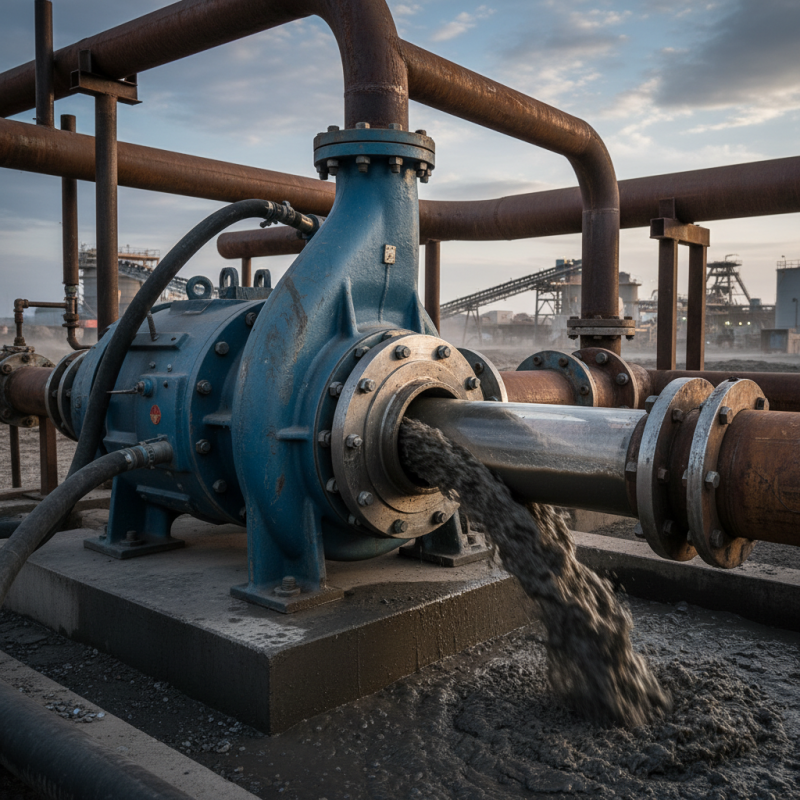
How to Choose the Best Heavy Duty Slurry Pump for Your Needs?
Choosing the right heavy duty slurry pump is crucial for efficiency. Many factors come into play when selecting a pump. A heavy duty slurry pump must handle abrasive materials effectively. It’s important to assess the specific needs of your operation.
Consider the type of slurry you will be pumping. Each slurry has unique characteristics. The solids content and viscosity will greatly influence your choice. Not all heavy duty slurry pumps are designed the same. Some may excel in one application but fail in another.
Think about the pump's capacity and pressure. These elements impact performance significantly. Sometimes, users choose based on price alone, which can lead to regrets. A pump that does not meet your needs can cause delays. Always evaluate the long-term implications of your selection.
Understanding Heavy Duty Slurry Pump Applications Across Industries
Choosing the right heavy-duty slurry pump requires understanding its applications. These pumps are essential in various industries, including mining, construction, and wastewater management. Each industry has unique challenges that affect pump selection. For instance, mining applications might deal with abrasive materials, requiring durable construction and high-performance capabilities.
Tips: Consider the type of slurry you will be pumping. The viscosity and solid content can significantly impact your selection. A pump designed for light slurries may not perform well with thicker mixtures. Assessing these factors can prevent costly operational errors.
In construction, pumps may need to handle varying material types. The environment can be harsh, with exposure to elements that wear down equipment. Some pumps struggle in such conditions. It’s critical to select one with robust seals and protective features. Sometimes, high efficiency leads to an oversight of maintenance needs. Regular checks can extend the pump's lifespan.
Tip: Factor in maintenance requirements during your selection process. A high-performing pump that is hard to maintain could lead to unexpected downtime. Always weigh immediate performance against long-term upkeep in your decision-making.
Key Specifications to Consider When Selecting a Slurry Pump
Choosing the right heavy-duty slurry pump requires careful consideration of key specifications. First, look at the pump's flow rate. This determines how efficiently it can move slurry. High flow rates may seem ideal, but can lead to increased wear on the pump. Balance is crucial. Next, consider the pump's pressure rating. A pump that can handle higher pressures is essential for dense slurries, but make sure it matches your application needs.
Another important specification is the material of the pump. Pumps made from robust materials can withstand harsh chemicals and abrasive particles. However, some materials may not perform well in all conditions. You might find yourself frequently checking for wear and tear. Also, take note of the pump’s impeller design. Different designs can influence how well the pump performs with varying slurry compositions. A good impeller can reduce clogging but may be less efficient for certain mixtures. Evaluate your specific requirements to find the balance that works best for you.
Heavy Duty Slurry Pump Specifications Comparison
This chart compares the key specifications of three different heavy-duty slurry pumps. Evaluating parameters such as maximum flow rate, maximum head, solid size handling capability, power consumption, and weight is essential for selecting the best slurry pump for your specific needs.
Comparative Analysis of Slurry Pump Materials and Their Durability
Choosing the right materials for a heavy-duty slurry pump is critical. Different materials have varying levels of durability and resistance to wear. Common materials include rubber, metal alloys, and ceramic composites. Rubber is often flexible but may not withstand heavy abrasion. Metal alloys offer strength but can corrode in certain conditions. Ceramic composites are durable but can be brittle.
It is essential to assess the specific application of your slurry pump. High abrasiveness in the slurry may require tougher materials. Not all materials perform equally under all conditions. Some might excel in temperature resistance but fail in corrosive environments. The right choice can lead to durability and efficient performance. On the other hand, wrong choices can lead to increased maintenance and costs.
Additionally, manufacturers often provide durability ratings, but real-life conditions can vary. Wet installations may pose unanticipated challenges. Accounts from users show mixed experiences, highlighting that even the same material can perform differently based on application. It's vital to gather feedback from diverse sources before making a decision. Ensure that your choice aligns with the specific demands of your working environment.
Evaluating Pump Performance Metrics: Flow Rate and Pressure Ratings
When selecting a heavy-duty slurry pump, understanding flow rate and pressure ratings is crucial. Flow rate refers to the volume of fluid the pump can move in a certain period. A higher flow rate means the pump can handle larger volumes. This is vital for industrial applications where efficiency is key. However, if you need a specific pressure range for your operations, the flow rate alone may not suffice.
Pressure ratings indicate the pump's ability to overcome resistance in the piping system. Knowing the required pressure can prevent operational failures. If the pump's pressure rating is too low, it may struggle, leading to inefficiency or even damage. It’s important to understand the relationship between flow and pressure. Sometimes, a pump with a high flow rate might not perform well under certain pressures.
Evaluating these metrics can be challenging. Different applications have unique demands. A pump may excel in one scenario but falter in another. It can be easy to fixate on one metric while neglecting the other. Always consider the specific needs of your project. Experimentation might be necessary to find the perfect balance between flow and pressure. This process may include some trial and error, which is worth the effort for optimal results.
Maintenance and Operational Costs of Heavy Duty Slurry Pumps
When selecting a heavy-duty slurry pump, it's essential to consider maintenance and operational costs. These costs can vary significantly depending on the pump design and materials used. Regular maintenance is crucial to ensure longevity and efficiency. Neglect can lead to costly breakdowns and repairs. A well-maintained pump can reduce operational costs by preventing wear and downtime.
Operational costs often include energy consumption and replacement parts. Slurry pumps operate under challenging conditions, which increases wear on components. Over time, seals and bearings may need replacing. Understanding how these factors influence your budget is important. Many operators overlook these long-term costs, focusing instead on initial purchase price. This can lead to financial surprises later.
Additionally, consider the pump's efficiency when making a choice. Higher efficiency means lower energy bills but may require a more substantial initial investment. It's a balancing act that requires reflection. Sometimes, opting for a less efficient pump may seem more budget-friendly. However, hidden costs like maintenance may make it more expensive in the long run. Always factor in these elements when evaluating your options.