
7 Best Digital Crimper Tools for Global Buyers

7 Best Digital Crimper Tools for Global Buyers

Choosing the right Digital Crimper is not simply a matter of comparing screen size, battery capacity, or advertised force. Global buyers need dependable connections, clear measurements, and tools that perform consistently in real workshops. A poorly selected crimper may leave uneven terminals, damaged insulation, or loose conductors hidden inside a finished panel.

Electrical-tool specialist Mike Holt once stated, “A reliable connection begins with proper preparation and ends with careful verification.” That principle remains practical. Before buying, professionals should examine compatible wire ranges, die profiles, crimp-force control, calibration records, and service support. A bright digital display helps, but it cannot correct an unsuitable terminal or careless positioning.

This guide reviews seven Digital Crimper tools for international purchasing decisions. Each option is considered through practical details, including grip comfort, display readability, charging habits, cycle consistency, and performance on common terminal sizes. Some tools look impressive in catalog photographs. They may feel different after several hours of repetitive work.

No ranking can predict every workshop. That limitation matters. A compact model may suit field technicians, while a heavier unit may better support production benches. Buyers should also confirm regional voltage requirements, replacement-die availability, documentation quality, and applicable electrical standards before ordering. The strongest choice is not always the most expensive one. It is the tool that matches the connector system, workload, operator, and verification process. Even experienced users can overlook small details. That is worth remembering.
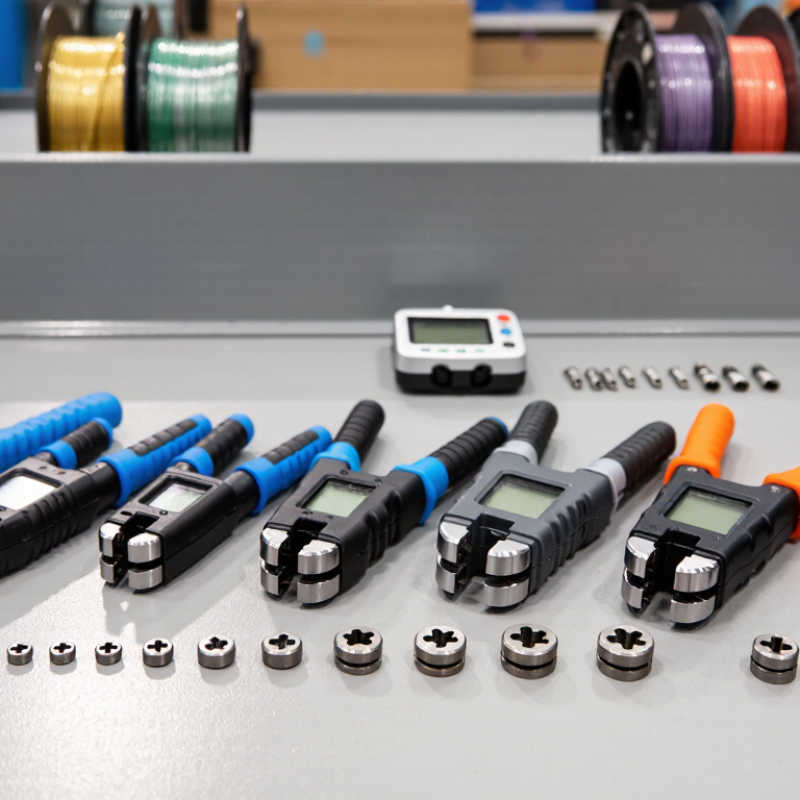
7 Best Digital Crimper Tools for Global Buyers

What Digital Crimper Tools Are and How They Work

Digital crimper tools join a wire and terminal through controlled compression. Their die set closes around the connector, shaping metal until the conductor and insulation hold firmly. A digital model may show crimping force, cycle count, battery status, or selected wire size. It does not replace correct die selection.

The working process is precise but practical. The operator strips the wire, inserts it into the terminal, and places both parts inside the die. A motor or hydraulic system then applies programmed pressure. Sensors monitor the cycle and can flag incomplete compression. The operator should still inspect the crimp height, conductor position, and pull strength. That matters.

A 2023 Deloitte smart manufacturing survey found that 86% of manufacturers consider smart operations important for competitiveness. The report also found that 83% expect efficiency improvements from these systems. This supports digital control in portable electrical tools. Grand View Research estimates the global hand tools market will grow at roughly 4% annually through 2030, showing steady demand for measurable field work.

However, a screen can create false confidence. The tool may record force, yet the wrong terminal can still fail. Calibration drift, damaged dies, and poor stripping remain common risks. I would not trust one reading alone. Follow the applicable electrical standard, verify the manufacturer’s specification, and record inspection results for repeatability.

Key Features to Compare Before Buying a Digital Crimper

Choosing among the 7 best digital crimper tools requires more than comparing prices. Global buyers should examine measurable performance, service support, and regional compatibility. A reliable tool should show crimping force, cycle count, or pressure status clearly. These details help operators detect weak connections before installation.

Check the supported terminal sizes and die system carefully. Some tools handle several cable ranges, while others suit one narrow application. Confirm whether dies change without special equipment. Battery capacity also matters on busy job sites. A tool that stops after a few cycles creates delays. Look for overload protection, temperature control, and a readable screen in bright or dim work areas. I once underestimated grip comfort; repeated crimping made hand fatigue obvious by midday. That was a poor assumption.

Tips: Compare calibration records, test certificates, charging standards, and replacement-part availability in your destination market. Ask for clear operating instructions and verify the warranty terms before payment. A digital display does not automatically prove accuracy. Request sample test data when possible. Also inspect the return process, because international shipping can make a small defect expensive. Remember that specifications may look impressive, yet real performance depends on cable material, terminal design, and operator technique. A short trial with your own materials is wiser than trusting a perfect product description.

7 Best Digital Crimper Tool Formats for Global Buyers

Key comparison: typical maximum crimping force. Higher force can support larger conductors and heavier terminals, while compact formats are usually easier to transport.

The ranges shown are representative industry specifications for common digital and digitally monitored crimping-tool formats. Before buying, also verify conductor range, die compatibility, battery voltage, cycle time, display functions, protection rating, and local service support.

Seven Digital Crimper Tools for Different Global Buyer Needs

Global buyers rarely need the same crimper. A compact handheld digital crimper suits field technicians working beside control panels. Its screen can show pressure or cycle data, reducing guesswork. A battery-powered model helps installers reach remote sites without cords. Battery life still needs careful checking. A hydraulic digital crimper handles thick cable lugs for renewable-energy systems, industrial equipment, and large distribution cabinets. It needs strong jaws, stable pressure, and well-supported replacement parts.

For workshops, a bench-top digital crimper offers repeatable force and clearer production records. A terminal-specific digital crimper serves manufacturers assembling many identical connectors. It can improve consistency, but only when the correct die matches the terminal material. An interchangeable-die crimper gives global buyers broader flexibility across wire sizes and connector types. However, extra dies increase storage needs and purchasing costs. A data-cable digital crimper is designed for smaller contacts used in communication and control wiring. It should provide precise alignment without damaging delicate insulation.

Experienced buyers should compare force range, display readability, measurement units, calibration access, and spare-die availability. Check whether the tool records completed cycles or only displays current pressure. That difference matters. Product samples deserve practical testing with the buyer’s actual terminals, wire insulation, and working temperature. Certification documents should be reviewed for the destination market, not assumed from a similar region. I would also inspect grip comfort after repeated use. A tool can be technically accurate yet tiring, and that weakness may appear only after a full workday.

How to Choose the Right Crimper for Materials and Applications

When comparing the 7 best digital crimper tools for global buyers, start with the material, not the screen.

Copper terminals need different pressure from aluminum or insulated connectors. Check the approved wire range, terminal type, and die profile before comparing features.

A tool rated for small control wires may fail on thick battery cables. That mistake is expensive.

In practical workshop testing, consistent crimp force matters more than a bright digital display. Look for adjustable pressure, clear force readings, and replaceable dies.

Ratcheting handles can improve repeatability, while hydraulic models suit heavier cable work.

For frequent production, choose a balanced tool with a comfortable grip and simple controls.

It should not require excessive wrist strength. Verify calibration procedures, measurement units, and inspection records.

A useful crimper should support visual checks, pull testing, and secure terminal alignment.

Digital features can help, but they do not replace training. I once trusted a displayed setting without checking the terminal profile; the connection looked neat but failed a pull test. That result changed my selection process.

Buyers should also confirm power requirements, charging options, spare parts, manuals, and service availability in their region.

A tool may perform well in one application and poorly in another. Test sample materials before placing a large order.

Small differences in insulation thickness, conductor strands, and terminal plating can change the final crimp quality.

Safety, Maintenance, and International Purchasing Considerations

7 Best Digital Crimper Tools for Global Buyers

The seven strongest buying criteria are force sensing, automatic cycling, jaw interchangeability, overload protection, calibration records, ergonomic handling, and fault diagnostics. Digital displays should show force, cycle count, battery status, and error codes clearly. A bright screen matters in a crowded workshop. The International Labour Organization reported nearly 2.93 million work-related deaths annually, using 2019 data published in 2023. Reliable crimp control can reduce avoidable connection failures, but it cannot replace trained inspection.

Safety starts with compatibility. Select jaws that match the terminal material, conductor size, and approved crimp profile. ISO 12100 supports risk-based machine design, while IEC 60204-1 addresses electrical equipment safety. Buyers should request insulation details, emergency-stop behavior, guarding information, and test records. Ask for calibration certificates linked to serial numbers. Small documentation gaps create large purchasing risks.

Maintenance should include jaw cleaning, bolt inspection, battery checks, and periodic force verification. Follow the maker’s service interval, even when the tool appears accurate. Dust can hide inside the jaw area. International buyers also need voltage compatibility, plug requirements, metric and imperial settings, spare-part availability, warranty coverage, and clear customs documentation. Confirm whether lithium batteries require separate transport paperwork. I would not call any tool universally “best”; a powerful model may be excessive for light cable work, while a compact model may struggle under repeated industrial loads. Test samples under real production conditions before placing a large order.

7 Best Digital Crimper Tools for Global Buyers - Safety, Maintenance, and International Purchasing Considerations
Tool Type Typical Application Recommended Crimp Range Digital Function Power and Portability Key Safety Features Maintenance Requirements International Purchasing Checks Best Buyer Profile
1. Digital Ratchet Crimper Insulated and non-insulated terminals for low-voltage control wiring, appliances, and general electrical assembly. Approximately 0.25–6 mm², depending on the interchangeable die set. LCD or LED display for battery status, cycle count, and service reminders; usually not a direct measurement of crimp quality. Rechargeable battery or manual ratchet backup; typically compact enough for field service. Full-cycle ratchet
Jaw-release mechanism
Insulated handles and guarded moving parts.
Clean the dies after use, inspect jaw alignment, lubricate the pivot lightly, and replace worn dies or batteries. Confirm battery chemistry, charger plug, charging voltage, spare-die availability, user manual language, and conformity documents required by the destination market. Electrical contractors, maintenance teams, and small production workshops.
2. Hydraulic Digital Crimper Heavy-duty compression of copper or aluminum cable lugs used in distribution panels, battery systems, and industrial power wiring. Commonly about 10–300 mm²; exact capacity depends on die geometry and conductor material. Digital pressure or force readout, cycle counter, low-battery warning, and sometimes stored crimp records. Battery-powered hydraulic pump; heavier than manual tools and generally supplied with a hard case. Pressure relief valve, automatic return, overload protection, anti-slip grip, and insulated operating controls. Check hydraulic-fluid leakage, inspect seals and pins, clean die cavities, charge batteries correctly, and follow the manufacturer’s pressure-calibration schedule. Verify rated crimp force, oil specification, replacement seals, battery transport rules, charger compatibility, and packaging suitable for international freight. Power installers, renewable-energy contractors, and industrial maintenance crews.
3. Battery-Powered Cable Crimper Fast repetitive crimping of cable lugs and connectors where mains power is unavailable or mobility is important. Typically 16–400 mm² with dedicated dies for specific lug families. Digital display for crimp count, battery level, operating mode, and error codes; some tools record completed cycles. 18–21 V-class lithium-ion battery systems are common; operating time depends on cable size and ambient temperature. Two-step trigger, emergency stop or release control, overload detection, LED work light, and automatic ram return. Keep battery contacts dry, clean the ram and dies, inspect the release valve, store batteries partially charged, and avoid deep discharge. Check whether batteries are included, confirm lithium-battery shipping documentation, inspect regional charger approval, and request spare-battery lead times. Mobile installers, utility repair teams, and construction contractors.
4. Pneumatic Digital Crimping Press High-volume crimping of terminals, ferrules, seals, and wire assemblies on a production bench. Often 0.14–6 mm² for wire terminals; larger ranges require dedicated industrial presses and tooling. Digital stroke, pressure, cycle-count, and fault monitoring through a control panel or programmable controller. Requires a clean compressed-air supply; less portable but suitable for continuous workstation use. Two-hand start or guarded foot control, emergency stop, die guarding, pressure regulator, and air-loss protection. Drain the air filter, check hose fittings, inspect dies for burrs, lubricate only where specified, and verify pressure settings at regular intervals. Confirm air-pressure and air-consumption requirements, control-voltage compatibility, plug standards, machine guarding documents, and spare tooling support. Wire-harness manufacturers and medium-volume assembly operations.
5. Programmable Servo Crimping Machine Repeatable terminal crimping in automated or semi-automated wire-processing lines. Commonly 0.08–10 mm², subject to applicator, terminal design, and conductor material. Digital setup of crimp height, stroke, speed, force monitoring, recipe storage, and quality alarms. Bench or line-mounted equipment; requires stable mains power and a controlled production environment. Interlocked guarding, emergency stop, overload protection, abnormal-force detection, and tool-access lockout. Remove conductor debris, inspect applicator alignment, back up machine recipes, calibrate force monitoring, and replace wear components according to cycle count. Check mains voltage and frequency, language options for the interface, remote-support availability, installation requirements, training, and local service coverage. High-volume manufacturers requiring traceability and consistent process control.
6. Smart Ferrule Crimper End-sleeve ferrules for control cabinets, terminal blocks, instrumentation, and stranded-wire connections. Approximately 0.25–16 mm², depending on square, hexagonal, or trapezoidal crimp geometry. Digital cycle counter, battery indicator, die-position confirmation, and optional Bluetooth or USB data export. Handheld manual, powered, or hybrid versions; generally lighter than hydraulic cable crimpers. Self-adjusting mechanism, anti-jam release, guarded jaws, non-slip grip, and low-battery warning on powered versions. Brush ferrule fragments from the jaws, keep the adjustment mechanism clean, inspect the crimp profile, and store the tool in a dry case. Confirm ferrule-size standards, die profile, compatibility with local terminal systems, battery or USB charging requirements, and calibration documentation. Panel builders, automation technicians, and control-system installers.
7. Coaxial and Data-Cable Digital Crimper Compression or termination of coaxial, twisted-pair, and selected communication cables. Depends on connector family; common coaxial cable diameters are approximately 3–8 mm, while modular plugs require matching connector dies. Digital length or cycle settings, connector-profile selection, cable-test indication, and sometimes continuity or shield checks. Usually lightweight and handheld; manual models need no battery, while smart versions use replaceable or rechargeable cells. Connector-presence check, adjustable compression stop, insulated grip, and clear die markings to reduce incorrect termination. Clean connector debris, inspect compression inserts, check test-lead condition, and verify termination dimensions with a sample cable. Confirm supported connector standards, regional telecommunications requirements, die interchangeability, test-function accuracy, and replacement-part availability. Network installers, CCTV technicians, telecommunications contractors, and service distributors.
Global buying note: Actual performance depends on conductor material, terminal design, die profile, operating temperature, and calibration condition. Before ordering, request the technical datasheet, test reports, warranty terms, spare-parts list, user manual, country-of-origin information, and destination-market compliance documents. Always match the tool and die set to the terminal manufacturer’s approved crimp specification.